




I was very impressed with Sissel's Lean Six Sigma knowledge. She makes it easy to identify improvements and create results.

Daryl Powell
Research Manager, Sintef Manufacturing
Intuition more important than analysis? What?!
I was listening to a podcast about trusting intuition.
They quoted chess player Garry Kasparov:
"Intuition is the defining quality of a great chess player. Not analysis. Not calculation."
My immediate reaction?
"What?! Intuition more important than analysis?"
Second thought: "But it feels right."
It was a paradox. I work with data. With methods. With separating signal from noise using statistical process control.
How can intuition be more important than analysis?
But the quote kept working in my mind.
And then I remembered something I talked about in my first webinar with GoLeanSixSigma, about patterns that keep us trapped in firefighting.
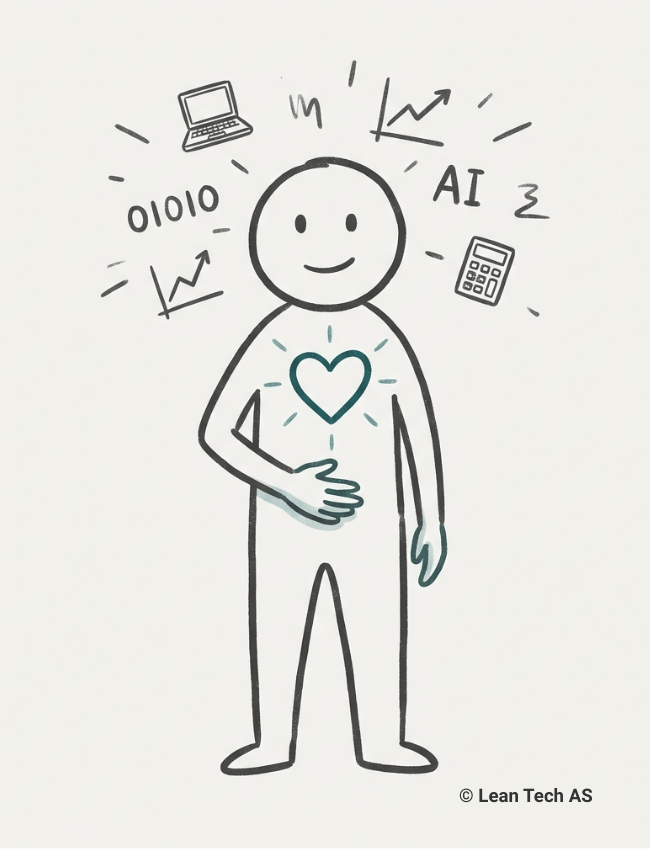
Insight: Intuition is not guessing. It's the brain's ability to process enormous amounts of information in the background, based on experience and knowledge.
Signs to watch for: You have lots of data but don't know what to do. You analyze without getting anywhere. AI gives answers that don't resonate with your gut feeling.
Next step: Use intuition to find direction, then analysis to verify and act.
Our brain has two systems that work in parallel:
The emotional system: Handles 16 million bits of information per second. This is intuition. The quick assessment. The gut feeling.
The rational system: Handles 40 bits per second. This is conscious analysis. Number crunching. Logical reasoning.
It's an enormous gap. 400,000 times more capacity in the emotional system.
And then it struck me: AI can analyze data better and faster than us. But AI has no intuition.
What this is about: Intuition is not random feelings. It's the brain's ability to process sensory input and recognize patterns you've experienced before. When you face something new, the emotional system recognizes similarities faster than the rational system can calculate them.
But be aware: Our sensory input is shaped by focus and expectations. This means intuition can lead you astray if your unconscious patterns are based on wrong assumptions or outdated experiences. That's why analysis afterwards is crucial.
How to recognize it:
• You have a gut feeling about what's right, but can't explain why
• You see patterns others don't see yet
• You know something is wrong with the data before you've checked all the numbers
• You don't trust the AI recommendation even though it seems logical
This is not guessing. It's the brain's way of telling you: "I've seen this before. And this is the direction."
In a world where AI is revolutionizing the way we work, intuition becomes our most important superpower.
AI can:
• Analyze thousands of data points in seconds
• Find correlations we would never see
• Run simulations of hundreds of different scenarios
But AI cannot:
• Know when data is unreliable because the process changed yesterday
• Understand that the numbers look good, but something feels wrong
• Give direction when everything is chaos and you don't know what to ask
That's what your intuition does.
It helps you:
• Make good decisions even when it's storming around you
• Separate signal from noise when everything is chaos
• Know which problem to solve before you start analyzing
Maybe you're not a chess player. But you recognize the dynamic:
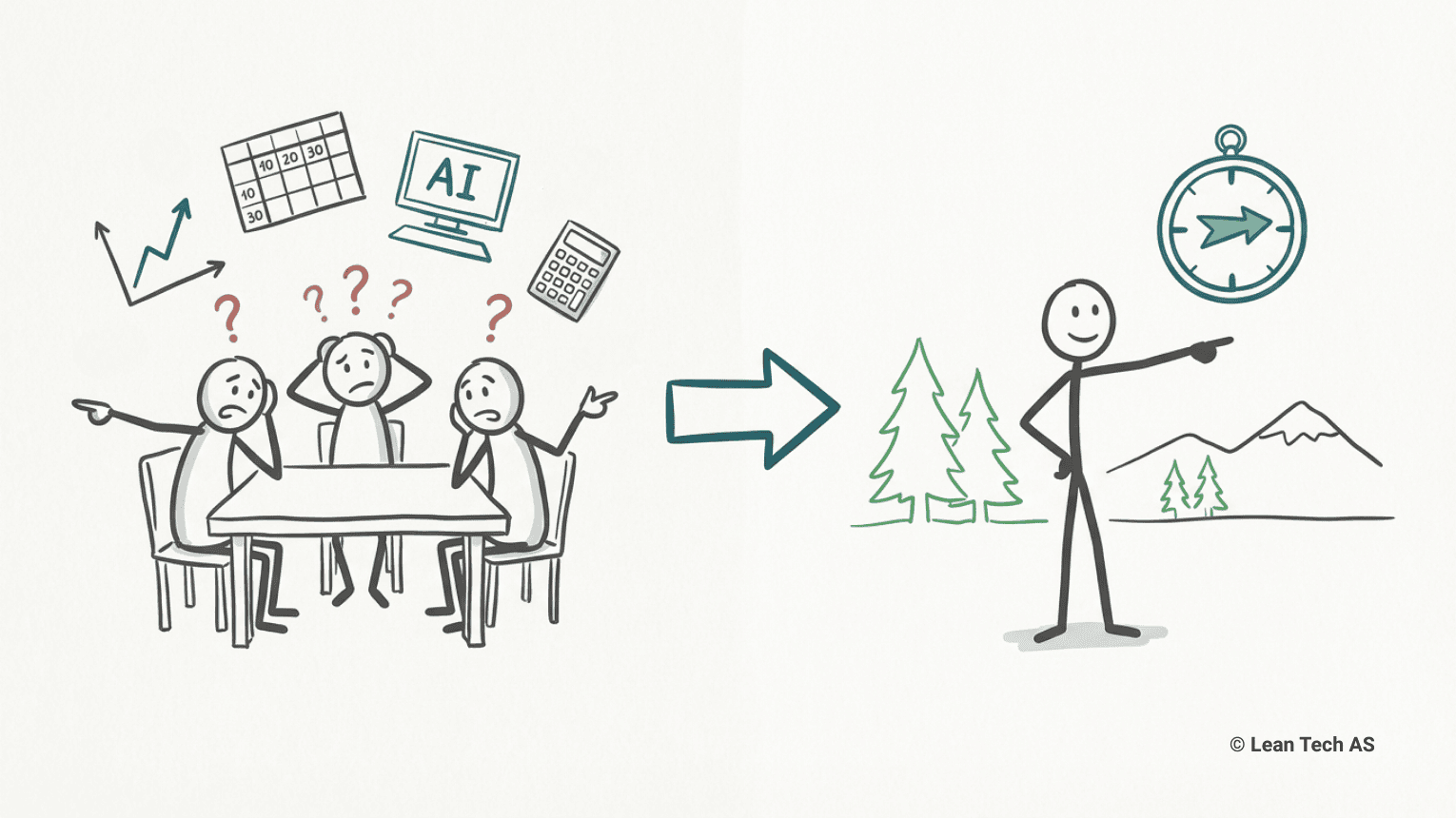
• You have lots of data in front of you, but don't know what to do with it
• You analyze and analyze, but get nowhere
• You use AI to analyze for you, but the answers don't resonate with your gut feeling
• You know something is missing, but can't put your finger on what
• The team discusses numbers, but no one has a clear direction
What's missing is not more data. It's direction.
Because collecting data, analysis, and AI queries depend on a clear goal to not just be noise.
And your intuition is what helps you find direction.
Step 1: Stop and listen to your gut feeling
Next time you're stuck in a decision, before you start analyzing: Stop. What does your gut feeling say? Write it down. Don't argue it away yet.
Step 2: Use analysis to verify intuition
Intuition gives direction. Analysis gives confirmation and precision. Ask: "What do I need to check to test if this feeling is correct?" Then: collect data, analyze, verify.
Step 3: Train intuition through experience
Intuition gets better the more you use it. Each time you solve a problem, reflect: What was the gut feeling? Was it right? What did I learn? This builds pattern recognition.
Isn't intuition just guessing?
No. Guessing is making a random choice without basis. Intuition is the brain's ability to process experience and patterns you've seen before, and give you direction based on 16 million bits of information per second. It's not random. If you never listen to intuition, you lose valuable information your brain has already processed for you.
Can intuition lead me astray?
Yes. Intuition is based on patterns the brain has formed from previous experiences. If these patterns are based on wrong assumptions, outdated situations, or confirmation bias (you only see what you expect to see), your gut feeling can point in the wrong direction. That's why you must always verify intuition with analysis. Ask: Is this based on experience that's still relevant? Or is it just old fear or wishful thinking?
How can I trust my intuition more?
Start by listening to it. Write down what your gut feeling says before you analyze. Check afterwards if it was right. Over time you learn to know the difference between real intuition and fear or wishful thinking.
How do I balance intuition and data analysis?
Intuition gives direction: "Which problem should we solve?" Analysis gives precision: "How do we solve it, and does the solution work?" You need both. Intuition without analysis is guessing. Analysis without intuition is running fast in the wrong direction.
This article is about the balance between analysis and intuition. About developing both, so you can make good decisions even when it's storming around you.
Join the waiting list for Lean Tech Community and get access to courses in the FAST method, AI tools that guide you through problem solving, monthly professional webinars where you can influence topics, and monthly Q&A sessions. For those who want to go from theory to measurable results.
Want more stories like this?
We send out weekly newsletters with experiences from the real world. Short stories for those who want to solve problems at the root and achieve measurable, lasting value creation.
Sign up for our newsletter:
If you want to learn more about the topics in this post:
• Learn to separate signal from noise with statistical process control
• Before you ask "why", ask "how often"
• Yellow Belt course: Learn structured problem solving
P.S. Next time you're stuck in a decision: Stop. What does your gut feeling say? It might be the most important signal you have.
I was very impressed with Sissel's Lean Six Sigma knowledge. She makes it easy to identify improvements and create results.
Very nice and professional service. Delivered a good job within deadlines.
Sissel's commitment and expertise is impressive. Her contribution to our monitoring program has been precise and targeted, as well as very educational.
We are very happy with the work carried out; with your background and expertise, the outcome was what we were looking for.
Sissel is a competent and committed employee. She has been an important contributor to ensure progress. At the same time, she is accurate and deliveres good quality work.
Lean Tech delivered monitoring program for air emission. The assignment was delivered with the correct content at the right time. Recommended.
Very engaged and focused throughout the course. Sticking to the agenda. Nice and pleasant.
Very good at keeping the right atmosphere, and at driving the participation from all the attendees.
Supply Chain & Automation Manager
"You are inspiring, positive and professionally skilled" "Made a difference, engaged and skilled"
"Inspiring, motivating and patient. Managed to adjust the subject to our level."
"Very knowledgeable. Good answers to all input."
"Excellent! Very clever and engaging"
"Great and fun with the Lego competition."
"Very good! Lots of knowledge and good at communicating."
"Good mix of theory and practice. Fun to try out what you've learned."
Very useful with practical implementation and approach, and that we could relate / transfer to our own workplace.
Inspiring, professionally competent, popularize a theoretical discipline.
Clear and well presented. Good at asking questions and listen (check understanding).
Academic highly skilled and clear performance. Fun and builds trust.
Lean Tech AS | Kristoffer Robins vei 13
0047 481 23 070
Oslo, Norway
L - Look for solutions
E – Enthusiastic
A – Analytical
N - Never give up


