


FMEA & process mapping: reduce risk before it becomes costly.
New processes and new equipment involve risk. FMEA identifies potential failures before they occur, and gives you a foundation for building processes that deliver consistent quality.
For existing processes, we combine FMEA with SPC and capability analysis to prioritise actions based on data — not assumptions. The same applies when scaling from pilot to full production, where data from the pilot provides a valuable foundation.
Who is this for?
This is for you if you:
- Are required to conduct a risk assessment by regulators or a customer — and want to get it right the first time.
- Are introducing a new process or equipment and want to identify risk before production starts.
- Experience recurring failures despite previous FMEA work — and wonder why the actions are not holding.
- Spend too much time in FMEA meetings without reaching clear priorities.
- Want an external facilitator who ensures the right team composition and a focus on prevention.
We have experience from pharmaceutical, food, defence and medical device industries.

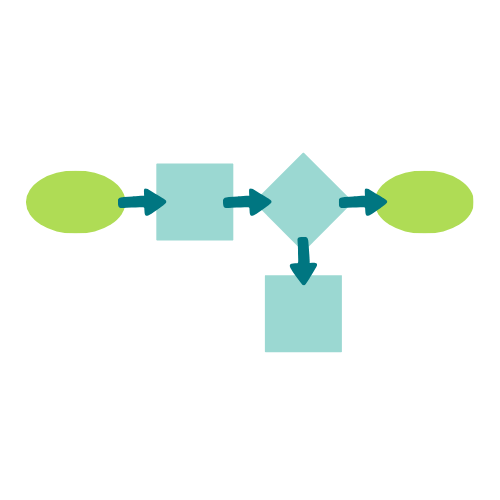
FMEA and Process Mapping: Our Approach
- We start with process mapping and function — not the failure list. This creates a natural distinction between cause and effect from the first step.
- We use failure statistics and capability (SPC) to prioritise where we dig — not where everyone finds it interesting.
- We distinguish between detecting a cause and detecting a failure. The action plan points towards prevention, not towards better detection.
- We facilitate cross-functional teams with the right composition — including the customer where relevant.
- We keep meetings efficient. Thorough preparation, focus on where the risk actually is.
What do customers say?
«Lean Tech was absolutely critical to the quality of the FMEA work we carried out as part of a major project. We gained a great deal of knowledge and learning that we have taken with us. The systematic approach and professionalism were impeccable.»
Marius Fagernes, Ringnes
"Sissel gave us a solid introduction to what PFMEA is and how it can be used in practice. We received good support getting started – both through on-site assistance and templates for facilitation and documentation. PFMEA is not a one-time job, and we take with us that templates and approaches need to be adapted to your own needs and followed up continuously."
Kjetil Grongstad, Kongsberg

What is FMEA?
FMEA (Failure Mode and Effects Analysis) is a risk analysis tool used to identify potential failures in a process or design, assess the consequences and prioritise actions to reduce risk.
FMEA is used in industries where failures can have serious consequences: pharmaceutical, food, defence and aerospace, to name a few. There are different types of FMEA:
- Process FMEA (PFMEA): analyses risk in the production process.
- Design FMEA (DFMEA): analyses risk in the product design.
- System FMEA: analyses risk at system level.
Traditional FMEA uses RPN (Risk Priority Number) calculated as severity × frequency × detection. An inherent weakness is that good detection can mask a real problem — the action plan points towards better monitoring, not towards removing the cause.
How we work
A good FMEA and process mapping engagement starts long before the first meeting. Our approach:
- Preparation: We map the process and define the function of each activity. We establish scales for severity, frequency and detection — and use existing failure statistics to prioritise focus.
- Team composition: We help you assemble a cross-functional team with the right competence — production, quality, maintenance and ideally the customer.
- Facilitation: We lead the meetings with a focus on prevention. We distinguish between detecting the cause early and detecting the defect after it has occurred – and ensure the action plan targets what is actually creating the failure, not better detection at the end of the process.
- Follow-up: We help ensure actions are implemented and that risk is actually reduced. Findings from root cause analyses are continuously incorporated into the FMEA document – treated as a living document, FMEA becomes a tool for continuous improvement, not a report filed away after the project.
Time and scope depend on process complexity and number of activities. Get in touch to discuss what suits your situation.
When do you need FMEA?
FMEA is particularly useful in these situations:
- Introducing a new process or equipment — before production starts.
- Regulatory or customer requirements for documented risk assessment.
- Recurring failures that previous actions have not resolved.
- Audit or recertification requiring updated FMEA documentation.
- Changes to process, raw materials or requirements that affect the risk picture.
Related tools we use in combination with FMEA: Statistical Process Control (SPC) and Root Cause Analysis.
What is the difference between PFMEA and DFMEA?
PFMEA (Process FMEA) analyses risk in the production process — what can go wrong in how the product is made. DFMEA (Design FMEA) analyses risk in the product design itself — what can go wrong with the product as designed. The two complement each other and are often used together when developing new products or processes.
What is the typical time commitment for an FMEA engagement?
It depends on process complexity and number of activities. A straightforward PFMEA can be completed in one to two days including preparation. More complex analyses take longer. Get in touch to discuss the scope for your situation.
We already have an FMEA. Can you help us improve it?
Yes. We review existing FMEAs, assess whether the priorities are correct and whether the action plan points towards prevention or detection. A review often reveals that previous actions addressed detection, not the cause. Combining FMEA and process mapping helps you understand cause-and-effect relationships.
What does it cost?
The price depends on scope — process complexity, number of meetings and level of preparation required. Get in touch for a no-obligation quote.
Can we combine FMEA with other services?
Yes. FMEA is often combined with root cause analysis to prove causes of recurring failures, and with SPC to prioritise focus based on capability and failure statistics.
Assignments
Contact info
Lean Tech AS | Kristoffer Robins vei 13
0047 481 23 070
Oslo, Norway
Lean
L - Look for solutions
E – Enthusiastic
A – Analytical
N - Never give up